


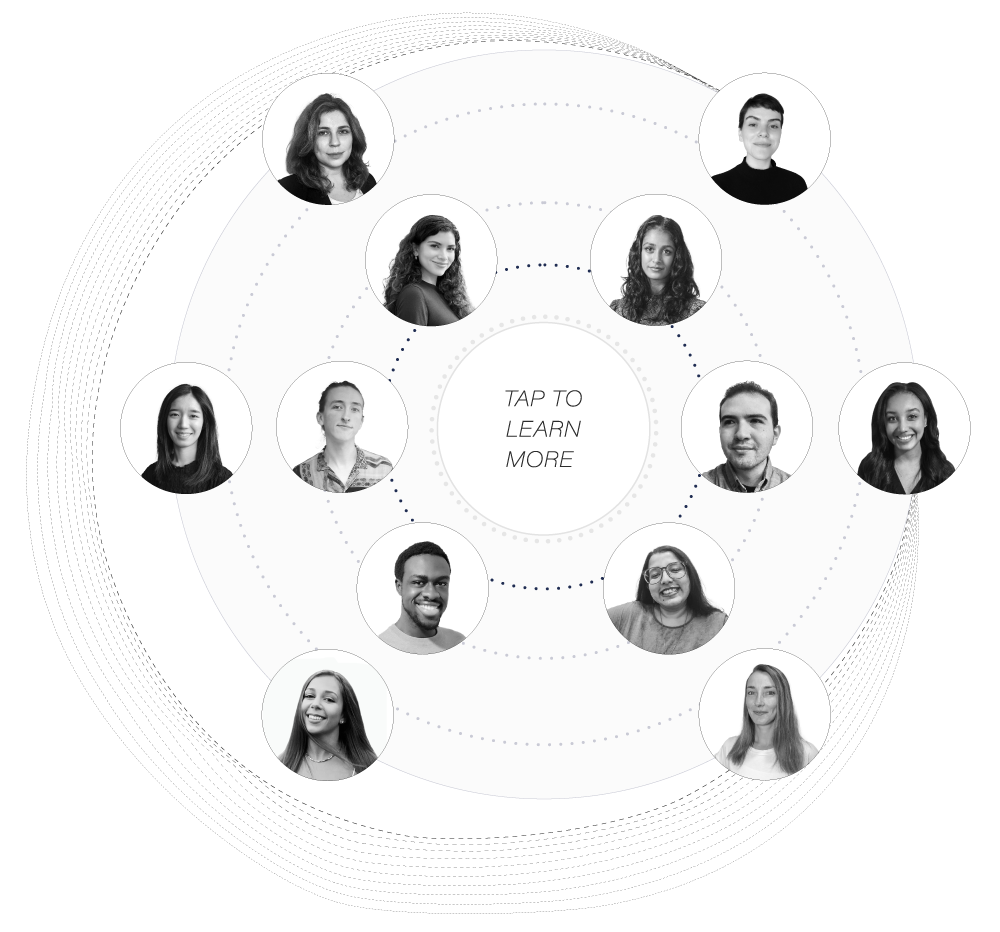
Our organization is redefining the role of creatives in facilitating holistic impact within communities and their built environment, balancing complex community needs while orchestrating disciplines.


Founder and President
Founder and President
As founder and president of Archea, Alexandria has led a breadth of distinctive built-environment projects and transdisciplinary community initiatives that aim to strengthen social and eco-systemic resilience. She draws on her project development and design strategy experience as well as her architectural background from Cornell University and the Architectural Association where she developed uniquely adaptable approaches to design and development that earned her a nomination for the acclaimed international RIBA medal.
She is driven by a desire to redefine the role of creatives in community place making. Alexandria hones her expertise in curating partnerships that create resilient support systems, co-developing with communities experiences that promote engagement, and managing multidisciplinary practices for integrating community driven impact in the built-environment.
With a portfolio that includes innovative developments in the United States, Dominican Republic, and Canada, Alexandria is committed to continuing to develop projects that foster a culture of authentic connection and reformative impact. Some of her most meaningful experiences include being immersed in nature, traveling, excitement and imaginative creativity within the team, learning from diverse cultures and ways of life, and enjoying time with friends and family.

Research Director
Research Director
As research director at Archea, Ami traverses boundaries between disciplines to discover methods of investigating and celebrating the intrinsic creativity and adaptation that surrounds us in our multifaceted world.
With extensive experience in civic leadership and community engagement combined with a passion for visualization and collaborative workshops, Ami crafts a safe space for analytical and creative pursuits that prioritize open dialogue and ethical engagement with diverse communities.
Ami’s interest in intertwining community engagement with design research has led her to prestigious travel research fellowships and the thesis prize at Cornell University. Her involvement as a designer and researcher in non-profits in India, Kenya, Singapore and the US brings a wealth of experience to the Archea team, including trans-media practices of storytelling and processes of placemaking. She has spearheaded advocacy initiatives for mental health and equity in education, with particular interest in mentoring future generations of aspiring designers.
Ami spends her free time being in constant awe of her world in New York City, from cat cafes and kite-flying in Prospect park to electronic concerts and food festivals, always searching for whimsy and the unexpected.

Operating Director
Operating Director
Jack is a chartered architect (ARB, RIBA) specializing in the culture and education sectors. As the operating director of Archea, he uses his extensive experience in cross-disciplinary coordination within the built environment to provide design and creative development solutions. Jack’s expertise lies in design strategy consulting, as well as research and development.
Jack believes that through collaborative consultation, design teams can create projects that are finely attuned to the needs of their users, address the climate emergency, and reflect the contemporary cultures that inhabit our built environment.
He has successfully applied these principles to various projects undertaken by Archea globally. In the past while working for Tonkin Liu Architects, Jack contributed to the York Minster Centre for Excellence, a stone masonry facility that offers the public a closer connection to the heritage of the old city. Additionally, he played a key role in delivering sophisticated robotic laboratories for King’s College London.
Jack enjoys making physical and digital sculptures and finds much of his inspiration while traveling in the UK and internationally.

Mediating Artist and Designer
Mediating Artist and Designer
Karolina as a designer and mediating artist uses her artistic talents to visually articulate ideas and facilitate effective communication through illustration. She translates research and discussion into diagrams and infographics, conveying multiple complex ideas through image, breaking the boundaries of language. She believes in the power of storytelling, and its capability to preserve the essence of childlike wonder and whimsy. Her interest in spatial governance has motivated research focused on community response to planning and urban policy. She explores the relationship of memory, identity and space.
Karolina is a New York based designer and with her previous work experience in Europe, she developed a portfolio of diverse project typologies, with a focus on residential architecture. She holds a B.Arch from Cornell University where she was engaged as a Research Associate for Jenny Sabin Lab, immersing herself in the world of biomimicry, exploring innovative approaches to digital fabrication. Her experiments with novel material applications were recognized by the American Composites Manufacturers Association (ACMA) in a composite challenge.
In her free time, Karolina is an avid enthusiast of trying new things, embracing languages, sports, and crafts as her personal hobbies. Her adventurous spirit constantly propels her to explore uncharted territories and broaden her horizons.

Designer
Designer
Joseph is a previous collaborator, focused on the exploration of architecture, built environments, and spaces that are reflective of the people, environments and cultures they serve. With a B.Arch from Cornell University and as a design associate at Sekou Cooke Studio, he confronts themes centered around community, authenticity and material culture.
His work emphasizes the processes of understanding contextual narratives, challenges and characteristics in order to create meaningful design aimed at resonating with inhabitants. To reach this goal, Joseph works towards cultivating a methodology where the process is designed to broaden the scope of an outcome that does not stop at the superficial form. This means holding steadfast to the experiences and values it is meant to embody.
While meticulous and targeted research is important to his process, the translation and application of its findings towards physical and other perceivable outcomes hold equal weight. As such the act of making through various scales, timelines, individually and collaboratively are crucial

Researcher
Researcher
Inspired by materials, craft, and the stories of the people who shape and use them, Daniel seeks to understand environments that catalyze creativity and instigate conversation regarding what has been and what could be. He explores ways to make evident and generate the narratives that are woven from these social and environmental interactions.
Several years of experience in architecture with projects spanning across scales and programs augments his conviction that design has tangible impacts on the way we interact with each other and the world around us, as well as the importance of imparting wonder and imbuing whim within the everyday.
He obtained a Bachelor of Architecture from Cornell University and later an MBA from Quantic School of Business and Technology. Born in Bogota, Colombia and now residing in Florida, Daniel enjoys scuba diving and printmaking.

Production Designer
Production Designer
Rabei is a previous collaborator who actively explores the intersection between architecture and the cinematic arts, prioritizing immersive sensory experiences and captivating narratives in her designs. She places great emphasis on storytelling as a means to unlock the transformative power of architectural spaces.
Rabei weaves her love for world-building into her design approach with a keen eye for curating and storytelling. She excels at assembling smaller elements that contribute to larger narratives while keeping the human experience at the forefront.
She holds a bachelor of architecture from Cornell University with a minor in film. Her love for filmmaking drives her to push boundaries and establish meaningful connections between the two disciplines. Rabei’s ambition is to leave a lasting impact on both the architectural and filmmaking industries, challenging conventions and creating spaces that resonate with people on a profound level.

Bio-Social Designer
Bio-Social Designer
Amaya veers her training in Industrial Design towards life-centered design in contribution towards the viable implementation of a regenerative, deep ecological existence on Earth through cross-disciplinary problem-solving at all scales of sustainable design (paradigm, system, platform, and material).
Her portfolio includes experience applying these fields in design and entrepreneurship with tropical reef restoration, STEM tutoring, Robotic design, Biomimicry consulting, Industrial Design and Architectural Design consulting. All these applied with an approach towards Regenerative, Social, and Bio Design; Design for Non-Urban and Urban Ecological Restoration; Upcycling optimization and waste-to resource strategies and applications; Migratory Issues; Speculative Design (Critical Practice); Design for Emergency; and Mitigating and Adaptive Design in the face of Climate Change.
Her systemic combination of experience in six countries in the cross-section between the artificial and natural world has facilitated a practical and theoretical experience with harmonious socio-eco-cultural design and consulting of platforms for a range of living beings, not just human.
Some meaningful experiences for her include spending time with loved ones, in-line skating, exposure to different cultures and natural spaces, photography, yoga and tree-hugging.

Storytelling Writer
Storytelling Writer
Catherine is a writer and holds a Bachelor of Science in Psychology from the University of Toronto. When not in class, she can be found working on her debut young adult fiction novel.
She is passionate about building narratives and bringing important stories to light and create global connections. She hopes to make a difference by providing a safe and positive space to foster ties between local communities and the people throughout the world who arrive to explore unique cultures.
Outside of her projects, Catherine loves spending time with friends, playing her bass, and perfecting her latte art skills.

Integrative and Computational Designer
Integrative and Computational Designer
Hanadi specializes in complex architectural and computational design that bridges the gap between human, natural, technological, and cultural fields. Her impetus is to explore future paradigms of architectural design that suggest how architecture might co-evolve with its environment, forming a high-complexity symbiosis between natural and artificial life
She aims to use digital tools to engage more deeply with a non-hierarchical architecture of care – for nature, its ecology of inhabitants and its communities. As an avid reader and proponent of posthumanist theory, Hanadi recognizes all users, perspectives, and processes within her work as equal stakeholders (human/non-human/natural/cultural), using procedural design tools to illustrate how these categories might be hybridized and co-constructed beyond their binary conceptions.
As a Master of Architecture graduate from The Bartlett UCL, Hanadi draws on 9+ years of experience as an architectural designer in London, most recently delivering high-profile residential, commercial, and infrastructural projects at design practices such as Zaha Hadid Architects and Arup. Outside of design, she finds her joy exploring bodies of water, at electronic music festivals, aquascaping and weightlifting.

Investigative Designer
Investigative Designer
Grace is a previous collaborator, she explores topics related to sustainability and community resiliency. One of her personal works was awarded Honorable Mention for the Non Architecture Competition in 2021. The project, titled Carbon Cruise, ties together emergent concepts and technologies in sustainable agriculture, aquaculture, and plastic decomposition as a response to the urgent global warming issue. She has developed many academic projects on revitalization and investigating new ways to build community resilience. She studied architecture at Harvard University and Cornell University.
Ethnographer
Ethnographer
Tory has 10 years of experience as a researcher, strategist, and immersive ethnographer. She is an expert at utilizing an unobtrusive and unassuming approach during interviews and has unparalleled experience working with a variety of audiences across categories. Tory has won some of the most prestigious honors in the industry, including the Qualitative Excellence Award and Young Professionals Grant for QRCA.
She was also a key strategist contributor on a project that was awarded the MRIA Award of Excellence. She has been featured on magazine covers for her ethnographic work as well. Her ability to connect with a wide range of audiences has helped her uncover consumer insights and “a-has” that help push strategy forward. She has completed a multitude of cutting-edge, award winning domestic and international research projects from several dynamic pieces for Cirque du Soleil to leading an international study with Google’s Head of Insights EMEA for gaming community research with Developers. Her projects have brought her all over the world including work in Shanghai and Punta Cana.
Some of her passion points include travel, skydiving, snowboarding, motorcycles, and the open road. From gaming to bungee jumping, she’s all in. All the time.
Our process requires collaboration and insights from diverse experts to co-design and implement authentic practices within community development, as well as build platforms for sharing knowledge.

Our ‘Design +’ toolkit methodology allows us to traverse between fine detail and the big picture, grass- root level engagement and strategy building. Our toolkit is both our method and the object of our work, evolving as our understanding of communities and bridging of disciplines deepens.
Our ‘Design +’ toolkit methodology allows us to traverse between fine detail and the big picture, grass- root level engagement and strategy building. Our toolkit is both our method and the object of our work, evolving as our understanding of communities and bridging of disciplines deepens.
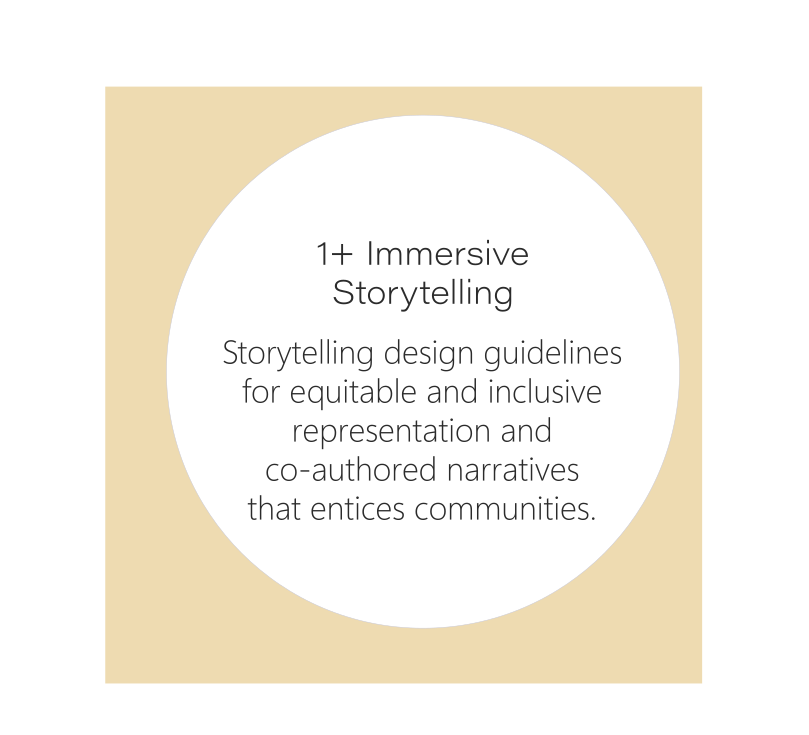
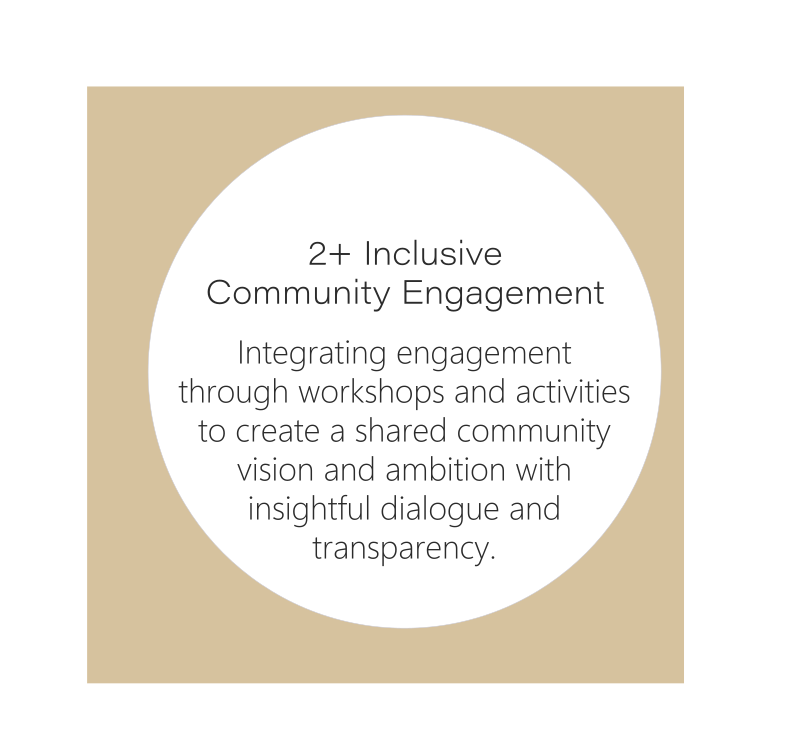
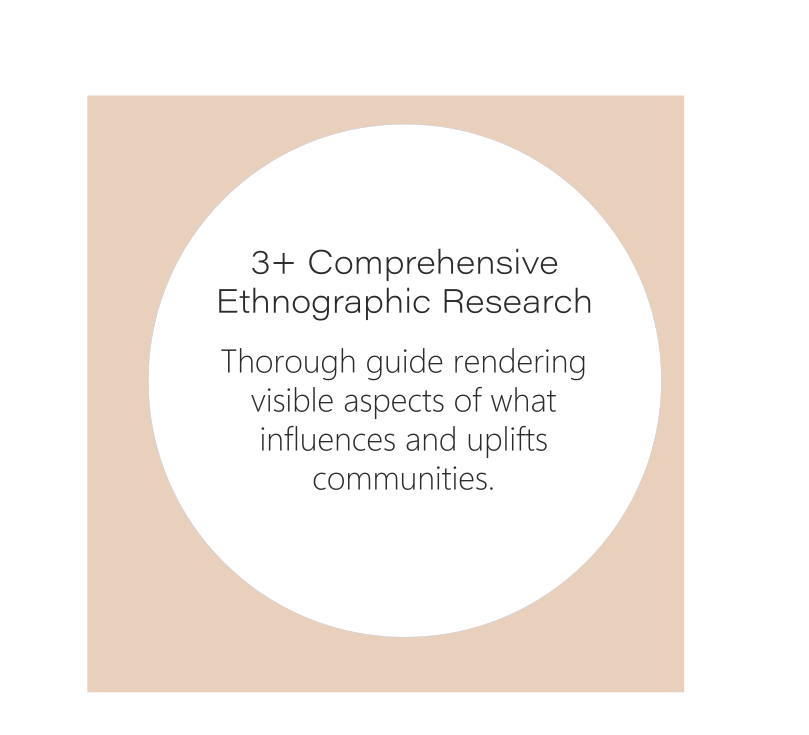
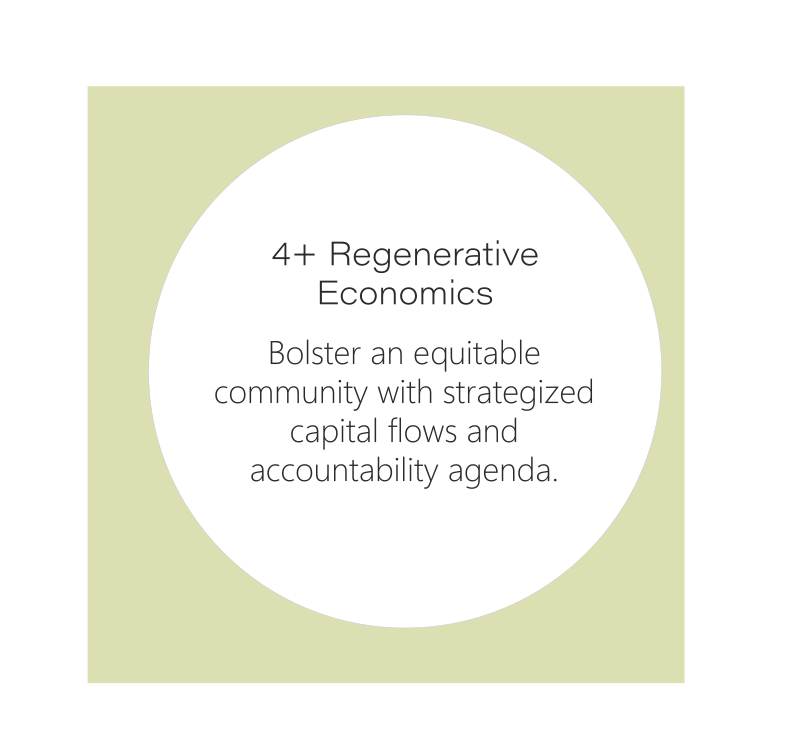
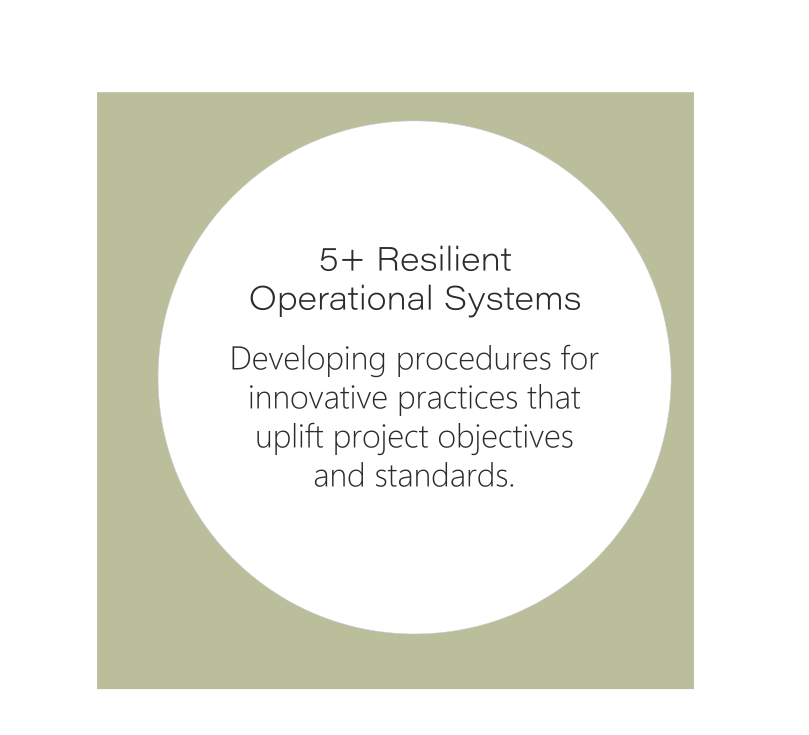
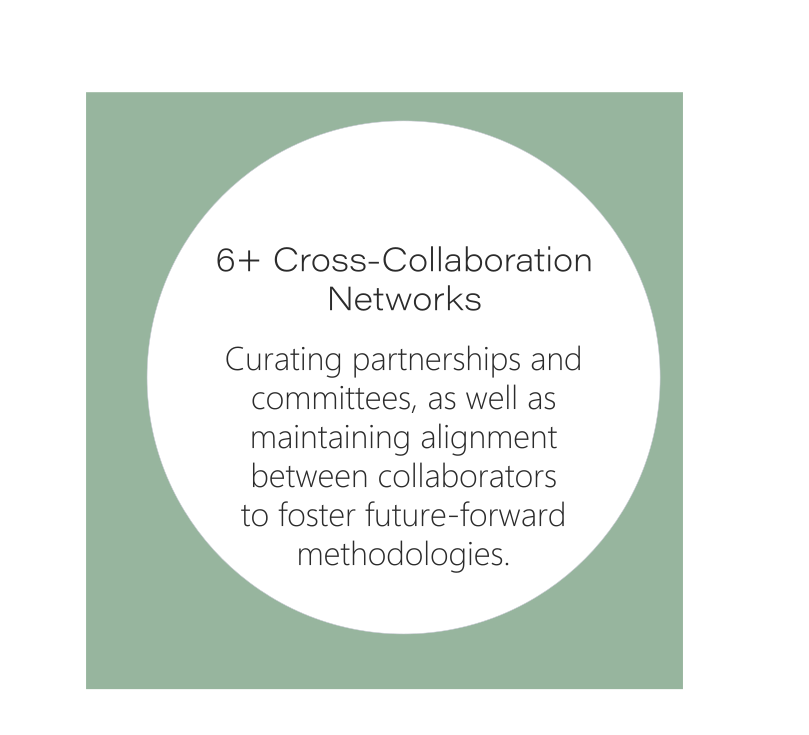
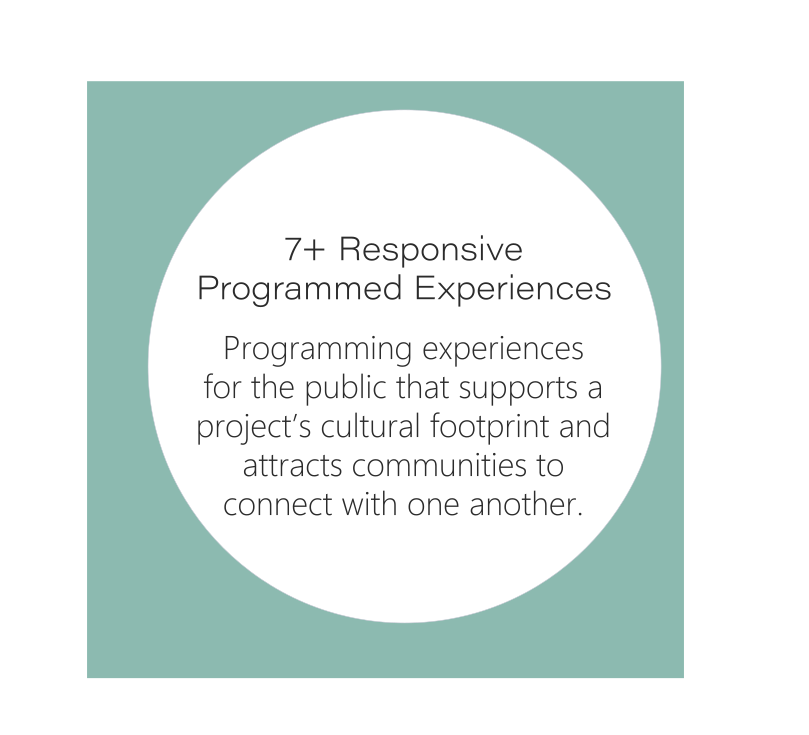
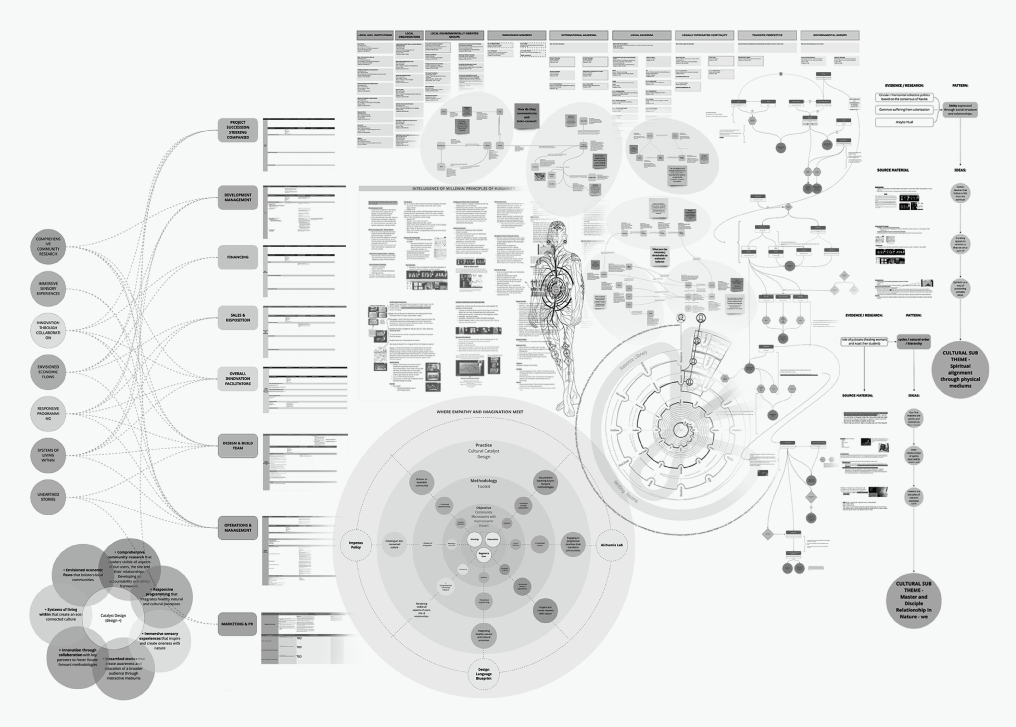
Through in-depth research, schematic diagramming, strategic planning, and visual storytelling, our process adapts and responds to each initiative that we take on. We integrate collective, creative thinking and trans-disciplinary skills to achieve long term cultural and socio-environmental wellbeing.

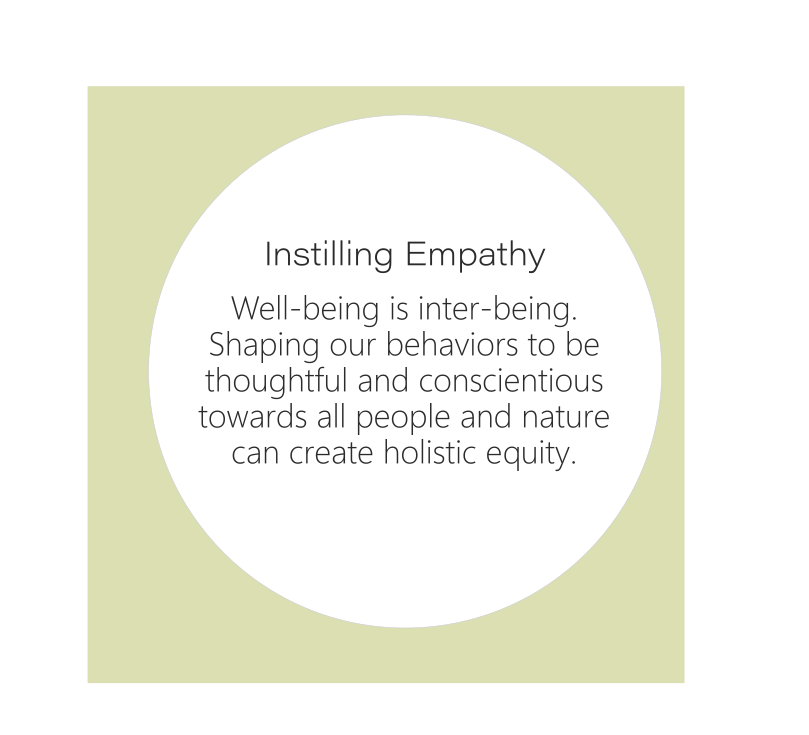
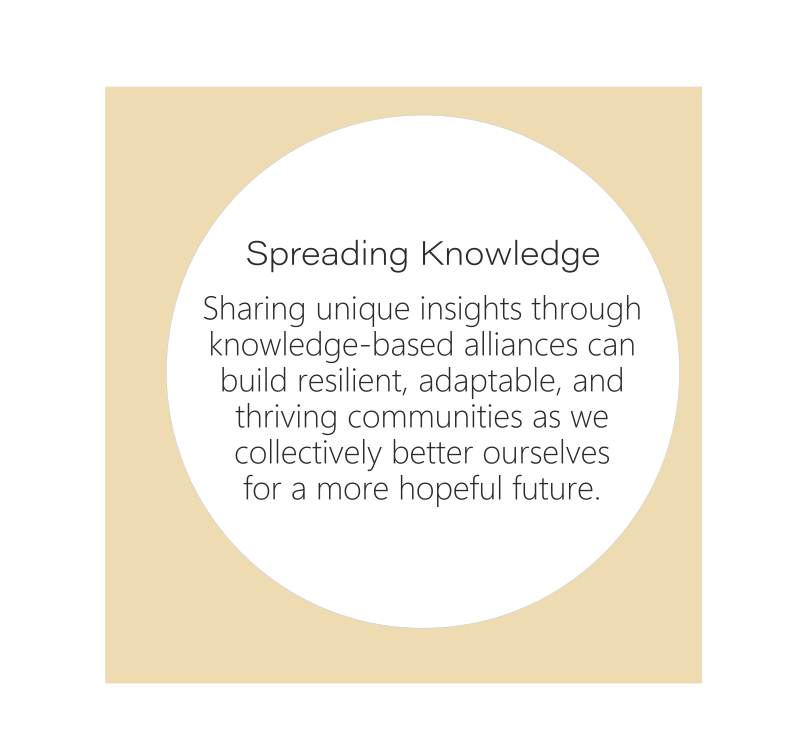
Our mission for community driven impact in the built-environment and our shared sense of responsibility to what we inherit - cultural and natural - culminates in three key values that we carry forth in every project that we take on.
Our mission for community driven impact in the built-environment and our shared sense of responsibility to what we inherit - cultural and natural - culminates in three key values that we carry forth in every project that we take on.
For more information on how we can work together please contact: Hello@archeagroup.org